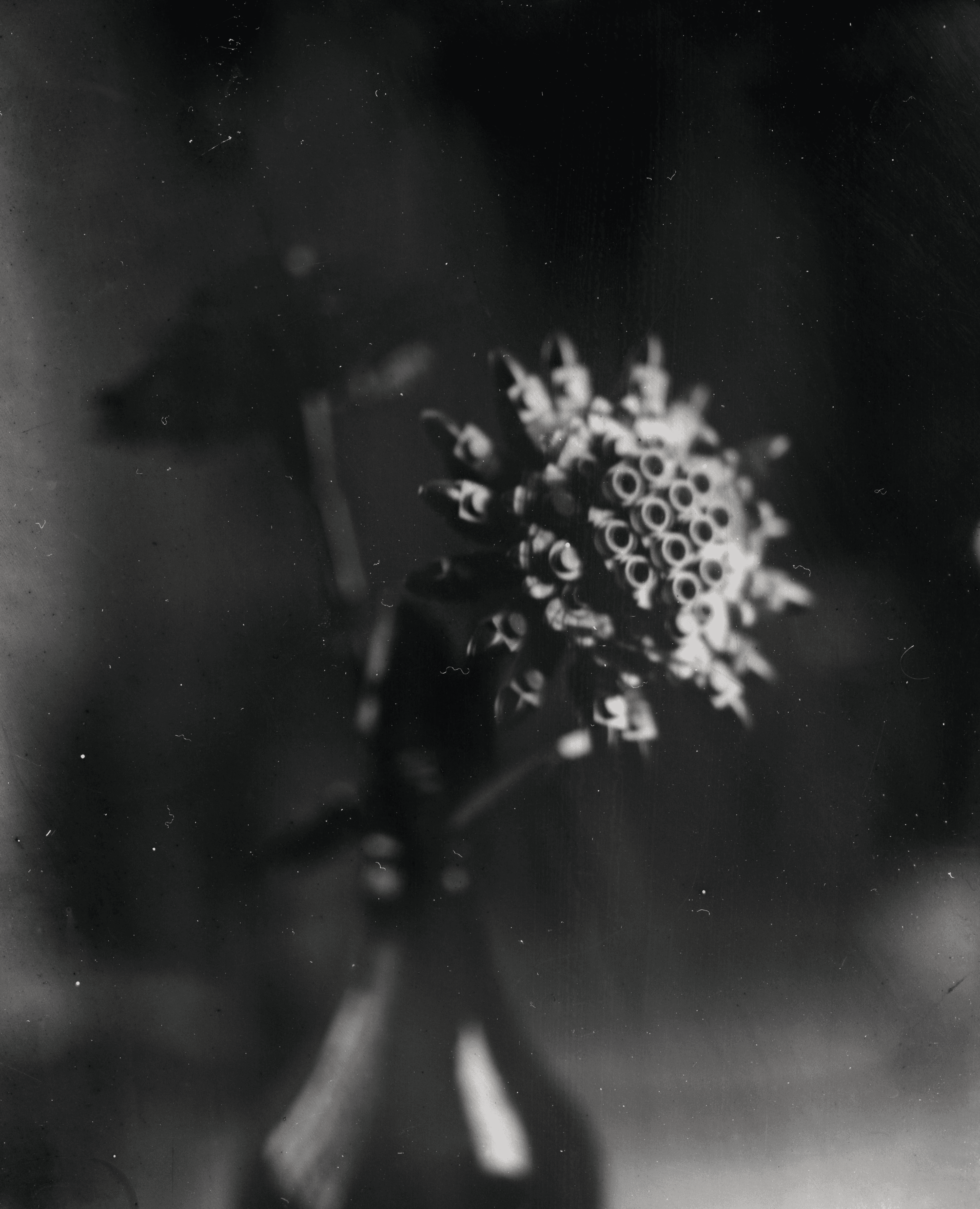
Wet Plate Collodion Workshop
Wet Plate Collodion Workshop
Wet Plate Collodion Workshop
Dates: October 2 to 5, 2026 (4 days)
Location: Dehradun, Uttarakhand
Fee: ₹40,000 per person
Dates: October 2 to 5, 2026 (4 days)
Location: Dehradun, Uttarakhand
Fee: ₹40,000 per person
Dates: October 2 to 5, 2026 (4 days)
Location: Dehradun, Uttarakhand
Fee: ₹40,000 per person
About the Workshop
This is a four-day intensive workshop dedicated entirely to the wet plate collodion process, one of the earliest and most hands-on photographic image-making techniques in history. Introduced in the 1850s, the process involves coating glass or metal plates with collodion, sensitising them in silver nitrate, exposing them in a large format camera, and developing them immediately while still wet.
The workshop is held at a private studio space in Dehradun, in a small group of participants. Every aspect of the programme is designed to give participants uninterrupted time with the process — to understand it, make mistakes, refine their technique, and leave with a body of work made entirely by hand.
The Process
The wet plate collodion process is an early photographic technique introduced in 1851 by Frederick Scott Archer. It involves creating images on glass or metal plates that must be exposed and developed while still wet. What this demands from the photographer is complete presence. There is no room for distraction, or shortcuts. Every plate is a single, unrepeatable image shaped by chemistry, light, timing, and the hands that made it. The results are one-of-a-kind physical objects, glass or metal plates carrying images that cannot be duplicated. This is what makes wet plate collodion one of the most compelling and sought-after processes in alternative photography today.
What You Will Cover
Over four days, participants move through the complete wet plate collodion workflow. By the end of the workshop, you will have a working understanding of the history and chemistry of the process, how to safely handle and prepare the materials, how to coat and sensitise plates, operate a large format camera, and develop and fix your images. The workshop closes with each participant completing a small, intentional body of work made entirely by their own hand.
Details
Location: Dehradun, Uttarakhand
Dates: October 2–5, 2026
Duration: 4 days (10:00 am – 5:00 pm daily)
Fee: ₹40,000 per participant
All workshop materials, chemistry, glass plates, and large format camera equipment are provided at the venue and included in the fee.
Accommodation & Meals
Accommodation and meals are not included in the fee. Participants are responsible for arranging their own stay in Dehradun for the duration of the workshop. We will share a list of recommended stays near the studio once registration is confirmed.
Who This Is For
You do not need to have worked with wet plate or alternative processes before, but a basic understanding of exposure and image-making is expected. The workshop is designed for people who want to engage seriously and deeply with a historic process over four full days.
Our practice
Wet plate collodion is our own practice before it is anything we teach. We have spent years working with the process, through its failures, its unpredictability. The workshops we run come out of that experience directly. Past participants have gone on to set up their own wet plate practices, which is the thing we are most proud of.
To Note
The workshop is designed for limited participants to ensure close, focused facilitation throughout. The process involves photographic chemistry, full safety guidance and protective gear are provided. Participants are expected to be present and engaged across all four days. The venue is a working studio space in Dehradun.
Registration
Registrations close by 15 September, 2026. Spots are limited and will be confirmed on a first come first served basis.
To apply, fill out the registration form below. We will get back to you within a day to confirm your spot and share payment details.
About the Workshop
This is a four-day intensive workshop dedicated entirely to the wet plate collodion process, one of the earliest and most hands-on photographic image-making techniques in history. Introduced in the 1850s, the process involves coating glass or metal plates with collodion, sensitising them in silver nitrate, exposing them in a large format camera, and developing them immediately while still wet.
The workshop is held at a private studio space in Dehradun, in a small group of participants. Every aspect of the programme is designed to give participants uninterrupted time with the process — to understand it, make mistakes, refine their technique, and leave with a body of work made entirely by hand.
The Process
The wet plate collodion process is an early photographic technique introduced in 1851 by Frederick Scott Archer. It involves creating images on glass or metal plates that must be exposed and developed while still wet. What this demands from the photographer is complete presence. There is no room for distraction, or shortcuts. Every plate is a single, unrepeatable image shaped by chemistry, light, timing, and the hands that made it. The results are one-of-a-kind physical objects, glass or metal plates carrying images that cannot be duplicated. This is what makes wet plate collodion one of the most compelling and sought-after processes in alternative photography today.
What You Will Cover
Over four days, participants move through the complete wet plate collodion workflow. By the end of the workshop, you will have a working understanding of the history and chemistry of the process, how to safely handle and prepare the materials, how to coat and sensitise plates, operate a large format camera, and develop and fix your images. The workshop closes with each participant completing a small, intentional body of work made entirely by their own hand.
Details
Location: Dehradun, Uttarakhand
Dates: October 2–5, 2026
Duration: 4 days (10:00 am – 5:00 pm daily)
Fee: ₹40,000 per participant
All workshop materials, chemistry, glass plates, and large format camera equipment are provided at the venue and included in the fee.
Accommodation & Meals
Accommodation and meals are not included in the fee. Participants are responsible for arranging their own stay in Dehradun for the duration of the workshop. We will share a list of recommended stays near the studio once registration is confirmed.
Who This Is For
You do not need to have worked with wet plate or alternative processes before, but a basic understanding of exposure and image-making is expected. The workshop is designed for people who want to engage seriously and deeply with a historic process over four full days.
Our practice
Wet plate collodion is our own practice before it is anything we teach. We have spent years working with the process, through its failures, its unpredictability. The workshops we run come out of that experience directly. Past participants have gone on to set up their own wet plate practices, which is the thing we are most proud of.
To Note
The workshop is designed for limited participants to ensure close, focused facilitation throughout. The process involves photographic chemistry, full safety guidance and protective gear are provided. Participants are expected to be present and engaged across all four days. The venue is a working studio space in Dehradun.
Registration
Registrations close by 15 September, 2026. Spots are limited and will be confirmed on a first come first served basis.
To apply, fill out the registration form below. We will get back to you within a day to confirm your spot and share payment details.
About the Workshop
This is a four-day intensive workshop dedicated entirely to the wet plate collodion process, one of the earliest and most hands-on photographic image-making techniques in history. Introduced in the 1850s, the process involves coating glass or metal plates with collodion, sensitising them in silver nitrate, exposing them in a large format camera, and developing them immediately while still wet.
The workshop is held at a private studio space in Dehradun, in a small group of participants. Every aspect of the programme is designed to give participants uninterrupted time with the process — to understand it, make mistakes, refine their technique, and leave with a body of work made entirely by hand.
The Process
The wet plate collodion process is an early photographic technique introduced in 1851 by Frederick Scott Archer. It involves creating images on glass or metal plates that must be exposed and developed while still wet. What this demands from the photographer is complete presence. There is no room for distraction, or shortcuts. Every plate is a single, unrepeatable image shaped by chemistry, light, timing, and the hands that made it. The results are one-of-a-kind physical objects, glass or metal plates carrying images that cannot be duplicated. This is what makes wet plate collodion one of the most compelling and sought-after processes in alternative photography today.
What You Will Cover
Over four days, participants move through the complete wet plate collodion workflow. By the end of the workshop, you will have a working understanding of the history and chemistry of the process, how to safely handle and prepare the materials, how to coat and sensitise plates, operate a large format camera, and develop and fix your images. The workshop closes with each participant completing a small, intentional body of work made entirely by their own hand.
Details
Location: Dehradun, Uttarakhand
Dates: October 2–5, 2026
Duration: 4 days (10:00 am – 5:00 pm daily)
Fee: ₹40,000 per participant
All workshop materials, chemistry, glass plates, and large format camera equipment are provided at the venue and included in the fee.
Accommodation & Meals
Accommodation and meals are not included in the fee. Participants are responsible for arranging their own stay in Dehradun for the duration of the workshop. We will share a list of recommended stays near the studio once registration is confirmed.
Who This Is For
You do not need to have worked with wet plate or alternative processes before, but a basic understanding of exposure and image-making is expected. The workshop is designed for people who want to engage seriously and deeply with a historic process over four full days.
Our practice
Wet plate collodion is our own practice before it is anything we teach. We have spent years working with the process, through its failures, its unpredictability. The workshops we run come out of that experience directly. Past participants have gone on to set up their own wet plate practices, which is the thing we are most proud of.
To Note
The workshop is designed for limited participants to ensure close, focused facilitation throughout. The process involves photographic chemistry, full safety guidance and protective gear are provided. Participants are expected to be present and engaged across all four days. The venue is a working studio space in Dehradun.
Registration
Registrations close by 15 September, 2026. Spots are limited and will be confirmed on a first come first served basis.
To apply, fill out the registration form below. We will get back to you within a day to share payment details for spot confirmation.